In a busy service, your whole team needs to communicate in the same language, fast and without ambiguity. The vocabulary of F&B is not jargon for its own sake; it is the shorthand that keeps kitchens coordinated, floor operations running, and management decisions grounded in the right numbers. A new hire who does not know the difference between a runner and an expediter, or a manager unfamiliar with RevPASH, is operating with a gap that shows up in service.
This glossary covers the essential terminology across every layer of restaurant and hotel F&B operations: from the floor and the kitchen to the management office and the metrics dashboard. Use it as a reference for onboarding, a refresher for the team, or a starting point for the conversations that matter.
Must-Know Restaurant Terms
- Back-of-House (BOH): All areas of the operation not visible to guests: typically the kitchen, dishwashing area, storage rooms, and staff facilities. BOH performance directly affects what guests experience in the dining room, even when they never see it.
- Booking Widget: An embedded reservation tool placed on a venue’s own website or social pages. Guests book directly without being redirected to a third-party platform. The widget is typically customizable with the venue’s branding, language settings, and shift rules.
- Cover: One paying guest. “Twenty covers” means 20 guests seated. Cover counts are the primary unit for tracking service volume and informing revenue planning.
- Floor Plan: A digital layout of a venue’s tables, sections, and service areas. In a table management system, the floor plan is live; each table shows its current status (available, occupied, being cleared, reserved) and the team manages seating directly from it. A well-configured floor plan reflects how the venue actually operate.
- Front-of-House (FOH): All areas where guests are present: the dining room, bar, host stand, and entrance. FOH teams are the guest-facing face of the operation.
- Guest: The preferred term for diners in hospitality. Using “guest” rather than “customer” reflects the standard of care the industry holds itself to.
- Guest Profile: A record of a guest’s preferences, dietary restrictions, visit history, special occasions, and contact information. A complete guest profile allows the team to anticipate needs before the guest arrives, and to follow up meaningfully after the visit.
- Host / Hostess: The team member responsible for greeting guests, managing the reservation book and waitlist, and coordinating seating. In many operations, the host sets the tone for the entire visit before a single order is placed.
- No-show: A guest who made a reservation but did not arrive and did not cancel. No-shows are a direct cost: the table was held, the covers were counted, and the team was staffed. Tracking your no-show rate over time is an important part of hospitality management.
- Online Booking: A reservation made through a digital channel. Online bookings update availability in real time and capture guest data at the point of reservation.
- PAX: Shorthand for the number of people in a party. “A table of four PAX” means four guests. Used interchangeably with “covers” in some operations, though covers typically refers to the final count served.
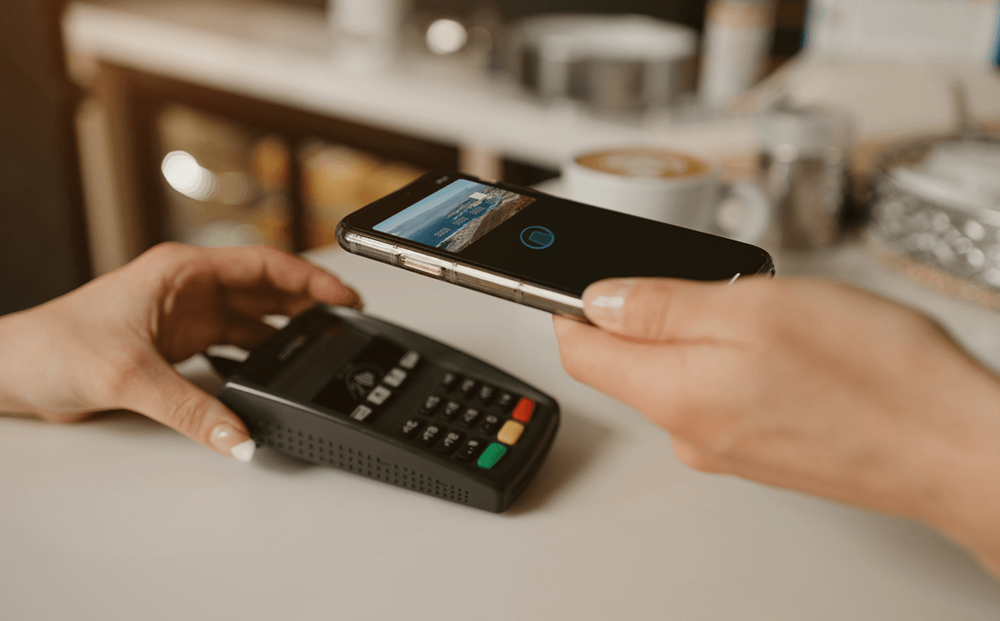
- Point of Sale (PoS): The system used to process orders and payments. Modern PoS systems connect to reservation platforms, inventory tools, and reporting dashboards, making them a central data source for F&B management.
- Pre-Authorization (Pre-Auth) / Card Hold: A temporary hold placed on a guest’s payment card at the time of booking, without charging it. Used to secure high-demand reservations, reduce no-shows, and protect revenue from last-minute cancellations. The hold is released if the guest arrives; the card is charged if they do not.
- Reservation: An advance booking for a table or event. Reservations are the foundation of everything in F&B hospitality; they allow you to plan staffing, prep, and seating layouts before service begins.
- Runner: A team member whose role is to deliver food from the kitchen to the correct table. In higher-volume operations, runners keep the flow between kitchen and floor moving without pulling servers away from guests.
- Server / Waiter / Waitress: The team member responsible for taking orders, serving food and drinks, and attending to guests throughout the meal.
- Shift: A defined service period with its own staffing, inventory, and booking rules. Most venues operate two or three shifts per day — breakfast, lunch, and dinner — each with its own cover cap, server assignments, and menu.
- Soft Opening: A limited opening before the official launch, used for staff training and operational testing. Soft openings let the team identify gaps in service and kitchen flow before full capacity.
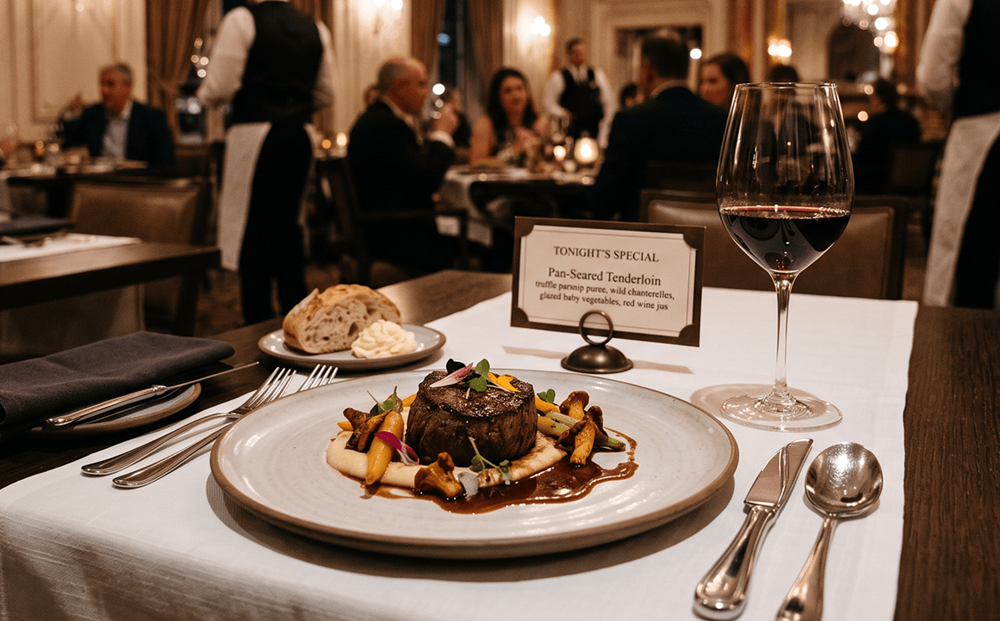
- Specials: Menu items offered for a limited period outside the regular menu. Specials serve multiple operational purposes: using ingredients before they turn, testing a dish before committing it to the menu, responding to seasonal availability, or giving returning guests a reason to come back.
- Walk-in: A guest who arrives without a reservation. The balance between accommodating walk-ins and protecting reserved covers is one of the core seating decisions in any service.
- Waitlist: A list of guests waiting for a table when the restaurant is at full capacity. A managed waitlist, with accurate wait times and guest notifications, keeps more guests in the funnel than a “fully booked” message with no alternative.
Types of Restaurants
The F&B industry covers a wide range of service models, each with its own operational logic, staffing structure, and guest expectations. The terms below appear frequently in industry conversations, operator benchmarking, and new team member onboarding.
- Casual Dining: A restaurant concept with a relaxed atmosphere, moderate price point, and typically a full table-service model. Casual dining operations often run higher cover volumes than fine dining and place more emphasis on table turn speed.
- Fast Casual: Counter-service restaurants offering higher-quality food than QSRs, with a more considered menu and dining environment. Limited or no table service.
- Fine Dining: Characterized by high-quality ingredients, formal service standards, and an elevated ambiance. Fine dining operations typically run lower cover volumes, longer average dining times, and higher spend per cover.
- Pop-up Restaurant: A temporary concept, often used to test a new menu, build brand awareness, or occupy a short-term venue. Pop-ups require flexible reservation and payment setups.
- QSR (Quick Service Restaurant): Fast-food establishments focused on speed, standardization, and volume. Table management and reservation tools are rarely applicable in a QSR context.
FOH, BOH, & Kitchen Terms
- 86 (Eighty-six): Kitchen and FOH slang for a menu item that has run out during service. “We’re 86 on the sea bass” means the kitchen has no more and servers should stop offering it.
- Barista: A trained professional who prepares and serves espresso-based drinks. In hotel F&B and all-day dining concepts, the barista role often extends to overall beverage service.
- Busser: The team member responsible for clearing and resetting tables between covers. Busser efficiency directly affects table turn time.
- Chef de Cuisine / Head Chef: The chef in charge of all kitchen operations: menu development, team management, standards, and execution.
- Dupe: A duplicate order ticket sent from the PoS to the kitchen. Dupes confirm what was ordered at the table and trigger kitchen preparation.
- Expediter (Expo): The person who manages the pass: organizes completed dishes and coordinates the handoff to servers. In a well-run kitchen, the expo is the connection between BOH and FOH during service.
- Fire: A kitchen command indicating that preparation should begin on a dish now. “Fire table 6” means start cooking for table 6.
- Line Cook: A chef responsible for a specific station on the kitchen line: grill, sauté, garde manger, and so on.
- Mise en Place: French for “everything in its place.” In practice, it refers to all the preparation — chopped ingredients, measured sauces, organized tools — completed before service begins. A kitchen without mise en place is a kitchen that falls behind once service starts.
- Pivot Point: A system for tracking guest orders by seat position rather than by name, ensuring dishes are delivered to the correct guest without the server having to ask.
- Pre-bussing: Clearing used plates and utensils while guests are still seated and have not yet finished their meal. Done well, it keeps the table clean and signals attentiveness. Done too early, it can feel intrusive.
- Prix Fixe: A set menu at a fixed price, typically multi-course. Common in fine dining and event catering.
- Sous Chef: The second-in-command in the kitchen, responsible for the kitchen in the head chef’s absence and for managing day-to-day prep and service execution.
Restaurant Management Terms
- À la Carte: A menu structure where each item is priced and ordered individually, as opposed to a fixed set menu.
- Booking Channel: The source or platform through which a reservation arrives: direct website, phone, walk-in, or a third-party listing platform. Tracking booking channels tells you which sources drive the most covers, what each channel costs in commissions or fees, and where guest data ownership sits after the booking is made.
- Cover Cap: The maximum number of covers allowed within a shift, section, or service period. Setting a cover cap prevents the kitchen from being overwhelmed at peak times and protects the pace of service. It also controls online booking availability: once the cap is reached, that slot shows as unavailable.
- Cover Fee: A per-guest charge applied to some bookings, particularly for special events or premium seatings.
- Deposit: An upfront payment collected at the time of booking, applied to the final bill at the end of the visit. Deposits reduce no-shows by giving guests a financial stake in the reservation. The amount and refund policy vary by venue; some apply deposits only to large parties or special events; others use them across all bookings during peak periods.
- Dynamic Pricing: Adjusting reservation or menu prices in real time based on demand. Used in some reservation systems to optimize yield during peak periods.
- Guestbook: A record of every guest who has visited or made a reservation at a venue. In a modern reservation system, the guestbook is dynamic: it builds automatically with each booking and visit, and the team can add notes before or after service. A well-maintained guestbook is the foundation of personalized hospitality.
- Integration: A technical connection between two systems — for example, linking a reservation platform to a PoS, a property management system (PMS), or a marketing tool. Integrations reduce manual data entry and allow operational data to flow between systems automatically.
- Inventory: The process of counting and tracking all ingredients and supplies. Regular inventory checks are essential for food cost control.
- Par Level: The minimum quantity of an ingredient or supply that must be on hand at all times. When stock falls below par, it triggers a reorder.
- Reservation Management System: Software that handles bookings across all channels — phone, online, walk-in — and manages availability, floor plans, waitlists, and guest data. Often integrated with a table management system but serves a distinct function.
- Table Management System (TMS): Software that manages the floor in real time: seating assignments, table status (available, occupied, being cleared), floor plan layout, and turn timing. Where a reservation management system handles incoming bookings, a TMS handles what is happening on the floor right now. The two functions are complementary and are often combined in a single platform.
- Table Turn: The cycle of clearing, resetting, and reseating a table between covers. A fast table turn keeps revenue flowing from the same seat. A slow one is not always a problem; it depends on the concept and the spend per cover. Managing table turns well means knowing which tables to move quickly and which to let run.
- Third-Party Platform: An external booking or listing platform that places reservations on behalf of a venue, typically charging a per-cover commission or a subscription fee.
- Top: The number of guests at a table. A “four-top” is a table of four. Used when planning seating configurations and floor layouts.
- Turn and Burn: Informal term for running a high-volume, fast-turnover service. Used to describe operations or service periods focused on maximizing cover count over dwell time.
- Upselling: Encouraging guests to order additional items or higher-value alternatives — a wine pairing, a premium cut, a dessert. Effective upselling reads as a recommendation rather than a sales pitch.
- VIP Flag: A marker in the guest profile that signals a guest requires elevated handling. VIP flags ensure the front-of-house team knows before the guest walks in, so the response is prepared rather than reactive.
Restaurant Customer Relationship & Marketing Terms
Restaurant marketing is how venues stay present between visits, attract new guests, and bring lapsed ones back. These are the channels and concepts most commonly used in F&B marketing — from the tools operators use to reach guests to the methods for turning a first visit into a recurring one.
- Acquisition Channel: The source through which a guest first booked or was acquired: direct website, Reserve with Google, third-party platform, social media, walk-in, phone, or marketing campaign. Tracking acquisition channel tells you where your guests are coming from and what it costs to bring each one in. It is the foundation of any decision about where to allocate marketing spend.
- Customer Relationship Management (CRM): A system for storing and acting on guest data: visit history, preferences, dietary requirements, special occasions, and contact details. In hospitality, a CRM is what allows you to personalize the guest experience at scale and run targeted marketing without starting from scratch each time.
- Email Marketing: A direct communication channel that lets venues reach guests in their inbox. Unlike social media, email is an owned channel: no algorithm controls who sees the message, and the venue retains the contact list regardless of platform changes.
- Marketing Automation: Automated messages — email, SMS, or WhatsApp — sent to guests based on triggers such as a booking confirmation, an upcoming visit, or a post-visit follow-up window. Automation allows you to maintain guest communication at scale without manual effort.
- Menu Engineering: The practice of analyzing menu items by profitability and popularity to make deliberate decisions about placement, pricing, and presentation. Menu engineering turns the menu from a list into a revenue tool.
- Newsletter Marketing: A regularly scheduled email sent to a venue’s subscriber list, typically covering what’s new at the restaurant, upcoming events, seasonal menus, or curated content relevant to the guest.
- SMS Marketing: Sending promotional or transactional messages to guests via text message. SMS has near-universal reach and high open rates. Best used for time-sensitive communication: a last-minute table availability, a same-day promotion, or a booking reminder.
- Touchpoint: Any moment of contact between a guest and a venue, from the first search result or social post to the booking confirmation, the arrival greeting, the service experience, and the post-visit follow-up message. Managing touchpoints consistently across the full guest journey is what separates a one-time visit from a returning guest.
- WhatsApp Marketing: Using WhatsApp to communicate directly with guests. For restaurants, the most effective use is transactional first — confirmations and reminders that guests expect — before layering in promotional messages.
Restaurant & Business Metrics
The metrics that matter most in F&B operations sit at the intersection of cost control, revenue optimization, and guest behavior. These are the terms most commonly used in management reporting and performance review.
- Average Spend per Cover: Total revenue divided by the number of covers served in a given period. A simple but essential benchmark for assessing whether revenue growth is coming from more guests or higher spend per guest. Tracked alongside cover count, it tells you whether pricing, menu mix, or upselling is moving in the right direction.
- Break-Even Point: The revenue level at which total costs equal total income. Understanding the break-even point tells you exactly how many covers, at a given average spend, are needed to cover fixed and variable costs each period.
- Conversion Rate: The percentage of guests who start a booking flow and complete a confirmed reservation. A low conversion rate on the booking widget or booking page points to friction in the process.
- Cost of Goods Sold (COGS): The direct cost of the food and beverage items sold during a period. Calculated as: opening inventory + purchases – closing inventory.
- Food Cost Percentage: The ratio of food COGS to food revenue, expressed as a percentage. Industry benchmarks typically sit between 28% and 35%, though this varies by concept and market.
- Labor Cost Percentage: Labor costs as a proportion of total revenue. Combined with food cost, this forms prime cost — the most closely watched figure in a restaurant P&L.
- No-show Rate: The percentage of reservations in a period where guests did not arrive and did not cancel. High no-show rates erode yield and affect staffing accuracy. Deposit policies and pre-service confirmation messages are the primary tools for reducing it.
- Prime Cost: The combined total of COGS and labor cost. For most restaurant operations, prime cost sits between 55% and 65% of revenue. It is the single most useful figure for assessing overall operational efficiency.
- Reservation Lead Time: The average time between when a reservation is made and when the guest arrives. Longer lead times indicate strong forward demand; shorter ones suggest a last-minute booking culture or a venue that fills up closer to the date. Lead time affects how you approach deposit policies, pre-visit communication, and marketing campaign timing.
- RevPASH (Revenue Per Available Seat Hour): Revenue generated per available seat per hour of operation. RevPASH accounts for both how much guests spend and how long they occupy a seat, making it a more accurate measure of yield than covers alone. Formula: total revenue ÷ (seats available × hours of operation).
- ROI (Return on Investment): The return generated by a specific investment relative to its cost. In an F&B context, applied to marketing campaigns, equipment purchases, or technology platforms.
- Table Turnover Rate: The number of times a table is seated within a given service period. A table that seats three different parties during a dinner service has a table turnover rate of three. Tracked alongside RevPASH, it helps you understand whether revenue growth is coming from more covers, higher spend per cover, or both.
The vocabulary of F&B management has expanded significantly over the last decade, particularly around the technology layer. Terms like guest profile, CRM, RevPASH, and marketing automation were rarely part of operator conversations a generation ago. They are now standard in any operation that is serious about growth. A team that understands these terms — and the systems behind them — is a team equipped to make decisions based on data rather than instinct alone.
Servme brings reservation management, guest data, and marketing automation into one platform, designed for operators who want to run a sharper operation. Book a free demo to see how it works for your restaurant.