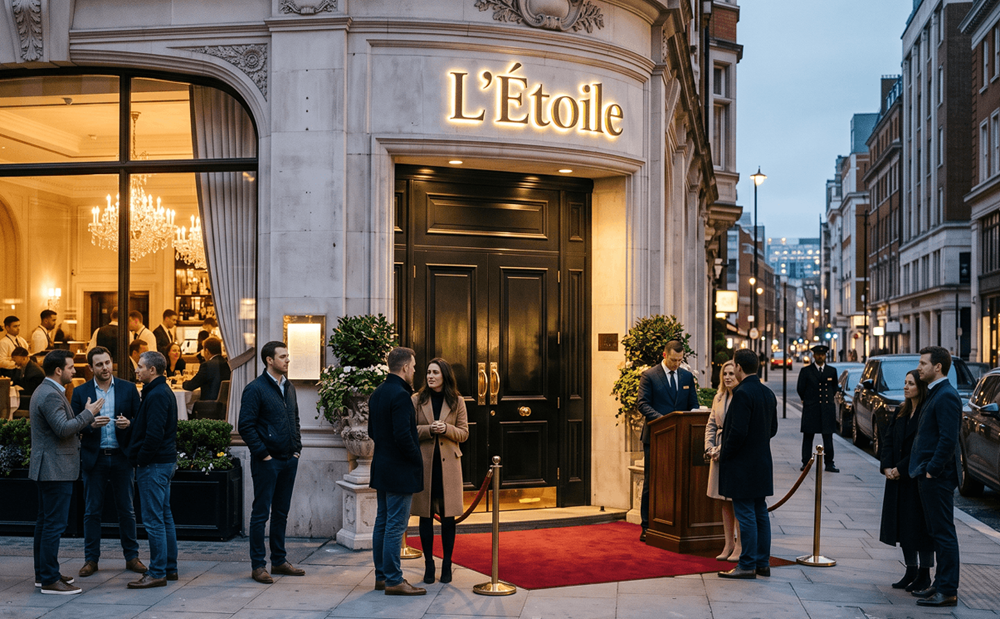
Friday evening, 7:30 p.m. A group of four walks in without a reservation. The host checks the floor plan, quotes 45 minutes, and the group smiles and leaves. This plays out in restaurants around the world every weekend, and the cost rarely gets counted. Restaurant wait times are one of the highest-friction points in the guest journey, and most of the damage happens in the first 90 seconds.
The 30-Minute Threshold
A 2024 Toast survey of 850 US adults found that 72% of diners said they would not wait more than 30 minutes for a table. That’s a US figure, but the mechanism is universal: guests who arrive without a booking (or, worse, with one but still have to wait) carry a mental ceiling on their patience. Exceed it, and they leave. What makes the threshold worth examining is what sits just below it. 66% of diners say a comfortable waiting area would extend their patience, and 82% say they would wait longer if offered a complimentary drink.
The 30-minute rule is less a hard limit than a default. For operators who manage the wait well, most guests will move it without being asked to.
What Should Happen at the Host Stand
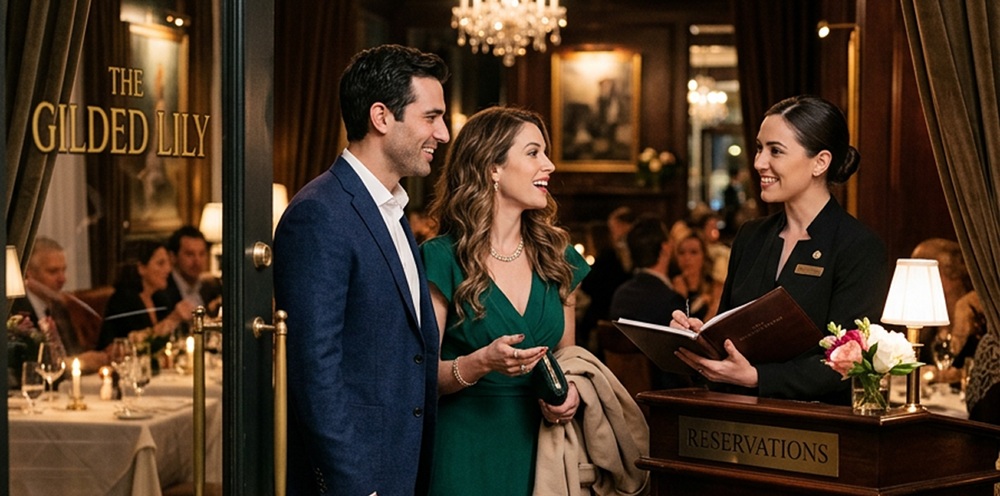
The host stand is not a queue management desk. It is the first real human interaction a guest has with the venue. As such, it carries weight well beyond the conversation itself. Operators who track how each touchpoint affects the guest experience know that the arrival moment is disproportionate: a guest who waits 20 minutes with no acknowledgment arrives at the table already in deficit. The food has to work harder before it’s even ordered.
Here are different ways to make a practical difference during a busy service:
1. Give ranges, not exact times. If the actual wait is 40 minutes, quote 30 to 40. Seat them in 38, and those extra two minutes feel like a gift. Quote accurately and seat late, and the guest remembers only the gap.
2. Update at the halfway point. A brief check-in — “We’re just finishing up your table, it won’t be long” — resets the clock in the guest’s mind. Text notifications through a digital waitlist do the same thing without the host leaving the stand.
3. Script the conversation. When every host handles the wait the same way, the experience is repeatable on a quiet Tuesday and a chaotic Saturday night. Without a consistent approach, the quality of the wait depends on whoever is at the door.
4. Start service before they sit down. A guest who has been offered something — a glass of water, a small bite, a gesture of awareness — is no longer simply waiting. They’ve already started their evening. The gesture doesn’t need to be elaborate. What matters is that it’s proactive: your team moves toward the guest, rather than leaving them near the door counting the minutes. Pair a small offer with a comfortable place to sit, and the wait reframes itself. By the time the table is ready, the guest isn’t arriving frustrated; they’re arriving warmed up.
Build the System Behind the Wait

The host stand conversation only works if the operational system behind it is reliable. Here are three things worth getting right before service begins.
1. Split the queue with intent. A single undifferentiated waitlist creates pressure that doesn’t need to be there. Separate parties by size, by preferred area, and by real compatibility with what’s available. A two-top and a six-top aren’t competing for the same seats. Managing the queue this way closes the gap between the quoted wait and the actual seating time, which is where most of the frustration accumulates.
2. Run notifications on one rule, every time. These are the messages you send to walk-in guests once their table is ready: the text, the app ping, or the host walking over. However your team does it, pick one method and apply it consistently to every waiting party. Mixed signals create confusion: a guest expecting a text who gets a call may not answer; a guest expecting someone to walk over who gets a text may miss it. Once you notify, build in a short grace window before releasing the table. Notify too early and the guest isn’t ready; release too fast and you’ve blocked a seat for nothing.
3. Set the expectation before booked guests arrive. When a reserved guest runs past their slot, every walk-in waiting behind them waits longer. Reservation confirmations that state table duration upfront — not as a restriction, but as useful context — reduce the chance of that overrun. Guests who know they have two hours plan their evening around it. They don’t linger past the mark wondering if they’re being rushed, because they arrived knowing. And when tables clear on schedule, quoted wait times for walk-ins stay accurate.
Going Digital: Waitlists That Change the Experience

Research shows that 45% of diners are more likely to choose a restaurant that offers an online or app-based waitlist. Among guests aged 18 to 34, 59% say they prefer a mobile notification or text update over standing near the host stand.
A digital waitlist changes the experience of waiting in a practical way. Guests can go to a nearby bar, browse the block, or sit outside. They receive a text when their table is ready. The wait time doesn’t change, but the quality of those minutes does. Guests who have left the premises return in a better state than those who’ve been hovering.
Hotel F&B operations see this dynamic differently. All-day dining, pool bars, and lobby venues manage more informal arrival patterns: guests wandering in mid-morning, families at check-out time, groups without a booking during a busy pool session. A waitlist system that handles walk-in queues alongside reservations gives the team a single view of demand rather than two separate systems running in parallel.
When Communication Fails
The scenarios that do the most damage are the ones that feel arbitrary to the guest. A party watching another group get seated first — without explanation — will not ask why. They will draw their own conclusion. A group told 20 minutes and still waiting at 45 will calculate the gap, and the meal will start under a cloud.
Managing restaurant wait times is partly a systems question, but mostly a communication question. The operators who handle it best set expectations early, update proactively, and account for exceptions in real time. “That party had a reservation, so we had to hold their table while they waited for one more guest. You’re next up!” takes four seconds and prevents a complaint. Most guests will accept almost any situation if they understand it.
No-show policies belong in this conversation too. A table sitting empty for 15 minutes while a group waits is a drain on goodwill and covers. A clear grace period in the booking confirmation — “We’ll hold your table for 10 minutes” — means the host isn’t making the call under pressure when a party runs late.
Managing the wait well is not about eliminating it. It’s about making the guest experience of waiting less costly to the guest’s overall impression.
Guests are not asking for zero friction. They’re asking to be managed through it. A 25-minute wait with an acknowledgment, a drink offer, and one text update outperforms a 15-minute wait in silence. The investment is mostly in behavior and tools, not floor space.
If your team is quoting times by feel, relying on verbal updates, and running a paper waitlist, the gap between what’s possible and what’s happening is worth examining before the next busy weekend.
Servme’s reservation and table management tools include digital waitlist and guest notification features built for restaurant and hotel F&B operations. Book a free demo with Servme!