Most Gulf restaurant email marketing is based on an email list. Rarely on a segmented one.
The default approach is to send the same message to everyone. The VIP who visits every Thursday. The guest who came once six months ago. The couple who celebrated an anniversary last year. The first-timer who walked in last Tuesday. One campaign, one offer, one piece of copy for all of them.
Restaurant email segmentation changes this. Instead of one message for everyone, each group receives communication that reflects where they are in their relationship with your restaurant. Segmented campaigns generate 50% more click-throughs than unsegmented sends (Mailmodo, 2025). The gap gets larger as your list grows.
Why the Same Message Sent to Everyone Is Losing Ground
The practical problem with mass email is not that it never works. It is that it becomes progressively less effective as guests grow uninterested.
Unsubscribe rates tripled between 2024 and 2026, with 31% of people citing email volume as their reason for leaving (clean.email, 2026; Publixly, 2026). For a restaurant, every unsubscribe is a guest contact permanently removed from your reach. A guest who unsubscribes because you sent them an irrelevant offer is a guest you cannot recover through email.
The fix is not better copy or a higher send frequency. It is personalization through segmentation. And the data required is already in your reservation system.
The Four Segments Every Restaurant Email List Should Have
The four segments below are built from standard booking data. They are not the only possible ones — far from it — but they’re a good place to start. No additional data collection is required. Each has a distinct objective and a different kind of message.
- VIP Guests
VIP guests are your most frequent visitors or your highest-spending regulars. A practical working definition: guests who have visited six or more times in the past 12 months. They can also appear consistently in your top spending tier.
The mistake most operators make with VIP email is treating the segment like the rest of the list. VIPs do not respond well to generic offers or mass promotions. What moves them is recognition. An early invitation to a new seasonal menu, a message acknowledging their usual table, a heads-up about an event before it is publicly promoted… These land differently than a percentage-off coupon sent to several thousand contacts.
It is a small segment and should be treated as a direct relationship, not a broadcast.
- Lapsed Guests (60 to 90 days)
A lapsed guest is someone who has visited your restaurant but has not returned in 60 to 90 days. This is the segment with the highest recovery potential relative to the effort required.
The reasoning is structural. A guest who has already been to your restaurant has cleared the trust barrier: they know the space, the price point, and the experience. What causes the gap is rarely dissatisfaction. It is more often inertia or a competing option that happens to be more convenient. A well-timed message with a genuine reason to return — a new menu, a seasonal event, a specific dish — is often enough to close it.
Win-back campaigns targeting this window consistently show double-digit recovery rates when the message is specific and relevant (Winback Engine, 2026). After 12 months, recovery becomes significantly harder. Do not let the lapsed segment go unchecked.
- Occasion Guests
Occasion guests are contacts who have a birthday or anniversary stored in their guest profile. This is one of the highest-performing segments in hospitality email. Birthday emails consistently achieve open rates more than three times higher than standard promotional sends. Their transaction rates are nearly five times higher than mass campaigns (Experian, benchmark research).
The mechanics are straightforward. An occasion email is expected, personally relevant, and time-sensitive. These three conditions drive engagement in ways no generic promotion can replicate. The right approach is to send it seven to 10 days before the occasion, with a specific reason to book: a complimentary course, a reserved window, or a menu curated for the event.
- New Guests
A guest who visited for the first time in the past 30 days is at the highest point of their awareness of your restaurant. The experience is recent, the likelihood of a second visit is higher now than it will be in 90 days, and a timely follow-up is the most direct lever available to turn a one-time visit into a habit.
The first follow-up should go out immediately. It does not require a discount. A genuine thank-you, a mention of something upcoming — a seasonal menu, an event, a dish worth returning for — and a clear reason to book is enough. Welcome emails as a category achieve open rates around 42%, among the highest of any triggered email type (GetResponse, 2024).
This is also the stage of the restaurant guest journey where most restaurants lose guests who could have become regulars — not through a bad experience, but through silence.
The Data Is Already in Your System
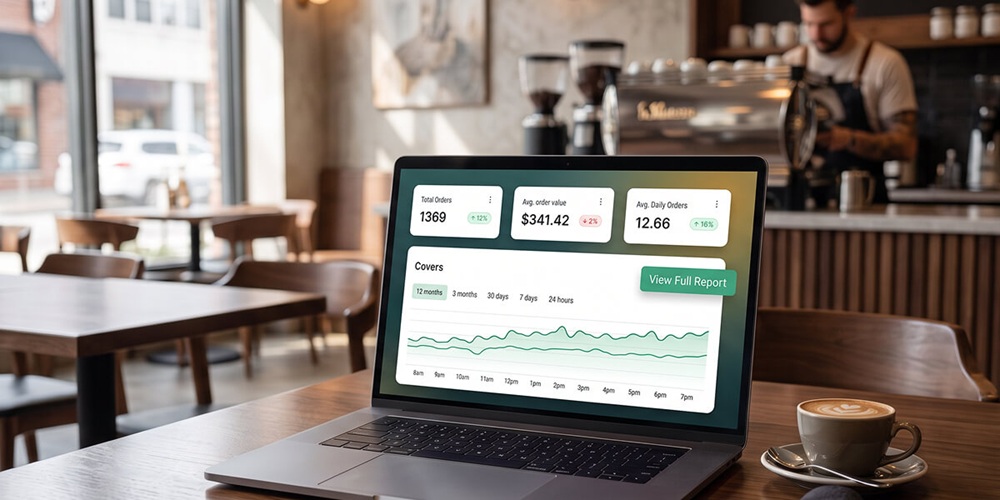
All four segments described above are built from data your reservation platform collects as standard: visit frequency, last visit date, occasion records, and first visit date. None of them require a separate data exercise or a new integration beyond your existing booking platform.
The constraint is not the data. It is taking the time to define the segments, set the filters, and create the sends. Most operators who go through this process once find the results of their restaurant email marketing make it worth repeating every quarter.
Servme’s guest CRM surfaces all of these data points directly from your reservation history and uses a simple, efficient tagging system. To learn more, book a demo with us directly.