Schools open across the region this week. For Gulf restaurants, September is not the beginning of a new season so much as the end of a forgiving one. The guests who went away for the summer are coming back. The question is whether your operation is ready for them.
The following September readiness checklist covers the decisions worth confirming asap. Each item is either done or it isn’t.
1. Staffing Plan Confirmed
Your autumn roster should be reviewed and set before September demand arrives, not adjusted in response to it.
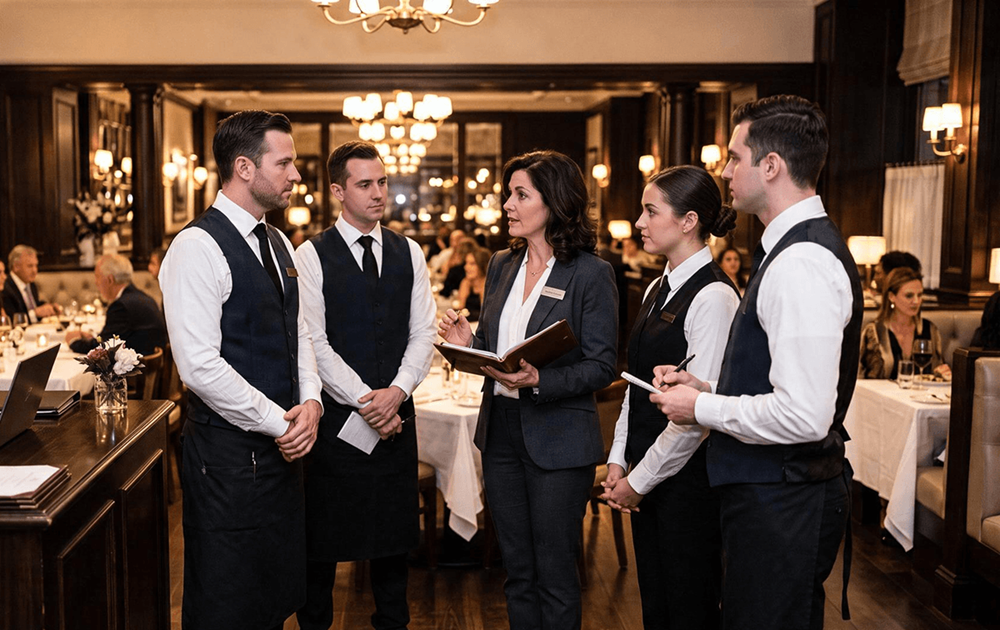
Identify which team members are available for flex shifts in the first three weeks. Two confirmed names on short-notice availability are worth more than a general intention to bring people in if needed. Cross-trained staff — those who can move between front-of-house and support roles — reduce the risk of a single absence disrupting a high-volume service.
2. Deposit Rules Reviewed & Updated
Summer is when no-show habits form: plans are more ad hoc, commitment is lower, and confirmation rates drop.
Before those habits carry into autumn, check your deposit and confirmation settings for large-party bookings. If the policy hasn’t been reviewed since Q1, now is the time. A no-show rate under 5% is achievable with the right configuration; above that, the cost compounds quickly at higher cover volumes.
3. Booking Window Open for September
Summer dining patterns often drift toward later sittings. Autumn bookings cluster earlier. If your availability windows are still configured for a July schedule, you may be blocking demand in your highest-value time slots without realizing it.
Also check your walk-in handling: September weekends fill faster than most operators expect in the first week, and overflow demand that can’t be captured is demand that walks to a competitor.
4. Lapsed Guest Reactivation Campaign Drafted
The guests most worth contacting this week visited regularly before summer and haven’t returned since June. Their absence is structural — they were away — not a signal that you’ve lost them.
A message that names the moment performs better than a generic prompt because it connects the outreach to something the guest is already experiencing. Have at least one segment ready to send Tuesday through Thursday: early-week messages reach guests in a planning mindset; Friday and weekend messages land when plans are already made.
5. VIP Personalized Message Scheduled

For your highest-value lapsed guests, a personal message does more work than a campaign.
Use their name. Reference their last visit if your system holds that record. One sentence of specificity outperforms three sentences of general warmth. Reserve this message for the guests whose return matters most to your autumn trajectory.
6. Team Briefed on Upsell Targets
The post-summer return is one of the stronger moments for menu exploration. Guests who haven’t been in for months are more open to recommendations than regulars who have already settled into their usual order.
If upsell conversion is flat after the first two weeks, the issue is almost always in the pre-shift briefing, not the guest appetite. A 20-minute session before the first autumn service — covering drinks, desserts, and upgrade ratios — sets the cadence for the season.
7. Menu Reviewed for Margin
As order volumes increase, food cost percentage needs active monitoring.
Identify which dishes carry the strongest margin and make sure they are prominent in the briefing and on the menu. If food cost spiked during summer — when prep staffing and portion consistency often drift — recalibrate now, before that spike compounds at higher volumes. A first-week variance almost always traces to one ingredient category or one shift change. Both are fixable early and expensive late.
8. Google Business Profile Updated
Your Google Business profile is often the first place a returning guest checks before making a reservation decision.
Confirm that your current hours, menu link, and any September offers are accurately reflected. An outdated profile — last updated in June — signals to a returning guest that the venue may not be paying attention. It takes 10 minutes to verify and correct.
9. Instagram Bio & Bio Link Ready
Check that your restaurant’s Instagram bio reflects the current season and that the link in bio points to the live booking flow, not a summer campaign page.
A returning guest who finds a broken or irrelevant link will look elsewhere. The bio link is the lowest-friction conversion point on the platform; it should be working and pointing to the right destination before September’s first weekend.
10. First Week of September Fully Booked with Confirmed Reservations
Not “Expected to fill” — confirmed. High-demand sittings for the first weekend of September should already be in the system with deposits captured. The operators who arrive at October with strong covers are not the ones who waited for September to open the booking window. They are the ones who filled the first week while guests were still in vacation mode and looking for something to come back to.
September preparation is four weeks of planning compressed into one week of action. The list above is not complicated, but the operators who treat each item as genuinely binary, done or not done, will arrive at October in a different position from those who treated it as a general intention.
This is the week. Check all 10.
Servme helps Gulf restaurants manage reservations, guest data, and operational reporting in one platform. Book a free demo here.