In July, Riyadh averages 43°C and Dubai 41°C. Outdoor terraces close across both markets and do not reopen until October. A portion of the resident population leaves for school holidays. And most restaurant operators respond the same way: cut costs, reduce hours, wait for September.
A smaller group of operators makes a different decision. They treat July as a competitive window. Service pressure drops, the data speaks clearly, and the team has room to develop. By September, the gap between these two groups is visible in every metric: covers, team performance, and margin.
Summer as a competitive advantage for Gulf restaurants? That’s possible, with work across three areas: marketing, team, and data. None require significant capital. But all require deliberate effort during the weeks most operators spend waiting.
Market to Who Is Actually Here, Not Who Was Here in February

The summer guest in the Gulf is structurally different from the peak-season guest. In 2025, UAE hotel occupancy climbed to between 60 and 70% in July and August, according to WAM data. Meanwhile, revenue per available room (RevPAR) grew 11.7% year over year in August across the Gulf, according to CoStar.
The GCC is not empty, but who is here has changed. The mix includes families staying through school holidays, business travelers, residents on staycation, and tourists drawn by lower prices.
And their behavior changes too. The guest who walks in on a Tuesday evening in July is booking the same day or within 24 hours. They are coming for an indoor occasion — air conditioning is a feature, not a given. Low-key occasions dominate: a birthday dinner, a date night, a break from a week at home.
So, an operator still running February promotions in July is writing for a guest who is no longer in the room.
The guests who stay are not the same profile as those who leave. Operators who acknowledge this in their July marketing fill more covers than those who do not.
Three adjustments make the biggest difference.
- Shift the occasion framing. Move from “great for groups” to “perfect for two” or “perfect for families.” Corporate bookings drop structurally in summer. Business staff are on holiday, team dinners pause, and corporate lunches largely disappear until September. The promotions built around them should pause too.
- Adjust the time-of-day targeting. Gulf diners in summer tend to book later. Street-level heat in the early evening discourages the 7 p.m. sitting that fills up in November. Shift peak capacity planning and promotional timing accordingly.
- Update the offer to match the indoor occasion. The summer guest is choosing where to spend an evening in air conditioning. The venue, the atmosphere, and the ease of booking matter more than the deal.
In the guest journey, two stages tend to determine whether a last-minute guest becomes a cover or goes elsewhere.
- Discovery: a guest deciding on the day needs to find you in that moment. Your Google Maps listing, Zomato profile, and Instagram presence need to be current and accurate.
- Booking: a guest who finds you but hits friction loses the cover. No live availability shown, no instant confirmation, a form requiring a phone call… they move to the next option.
The Return stage matters equally, for a different reason. A Tuesday-night guest in July who has a strong experience is a candidate for the rest of the year. Summer is a lower-cost window to earn that loyalty than October, when every operator is competing for the same recovered demand.
Use the Quiet Window for the Work That Cannot Happen at Full Service

The restaurant industry ran a 75% annual staff turnover rate in food service in 2025, according to Homebase. Besides, replacing a single FOH team member is more expensive than most operators plan for. The bill includes advertising, agency fees, onboarding time, and several weeks of below-speed service. Managers cost even more.
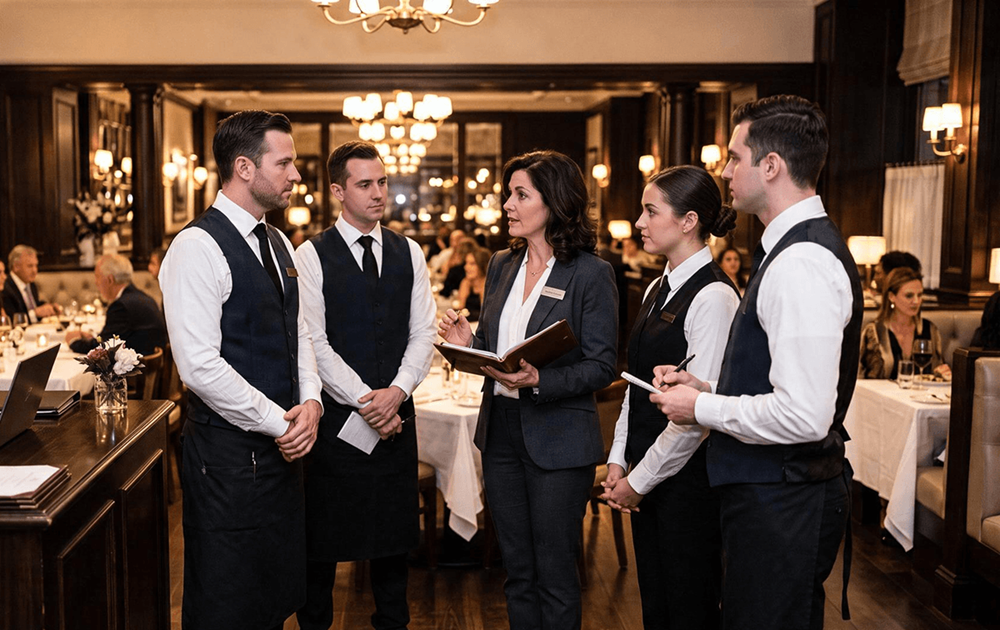
Operators who come out of summer with stronger teams treat July not as downtime but as structured investment. Lower covers mean more time per shift for real coaching. Lower service pressure makes honest performance conversations more likely to actually happen.
The return shows up in September. Hiring is competitive, and being one person short on a weekend service is directly visible in the numbers.
Here are four things worth doing with the team in July that are harder during peak service:
- Run the performance conversations deferred in Q2. Every team member who knows where they stand can make informed decisions about their future.
- Cross-train front-of-house staff across roles. The server who can seat and manage waitlists is more valuable in September than one who cannot.
- Walk the service sequence with new team members at a slower pace: arrivals, table management, upsell triggers, how to handle complaints.
- Brief the team on the September and Q4 plan so they arrive at peak season prepared, not surprised.
The operators who invest in their team in July do not need to scramble to hire in September. They walk into the busy quarter with a team that already knows the playbook.
Review Your Numbers Honestly While the Noise Is Lowest

The single most underused window in the restaurant calendar is the July data review. Lower covers and a less stretched team mean operators can look at the data honestly. The distortion of a full-capacity service week is gone. Yet, most operators do not look. They assume they know what the data says. They are usually wrong about at least one thing that matters.
Three areas reward honest analysis in July.
- Cover sources. Where did bookings come from in Q2? Walk-in, direct online, third-party platform, corporate account, return guest? Operators who know this invest in H2 with precision, and cut channels that cost more than they return.
- Menu performance. Which dishes sold at margin, which sold at volume, and which did neither? Summer is the right time to rationalize a menu that grew too long in Q1, before October complexity bites. A leaner menu is faster to execute, easier to train new staff on, and typically more profitable per cover.
- Campaign ROI from the last 90 days. Which promotions drove incremental covers? Which pulled forward demand from future weeks without adding net revenue? Which discounts went to guests who would have come anyway? These are questions that are genuinely difficult to answer mid-peak-season. In July, with lower service volume and cleaner data, they become tractable.
The output of this review should not be a report. It should be three decisions: one channel to invest more in for H2; one menu item to remove; and one promotion structure to retire. Operators who make these decisions in July act on them in September. Operators who skip the review make the same choices they made last year.
The Operators Who Use July Well Come Out of Q3 Ahead
These three areas connect. The data review tells you which channels drove covers in Q2 and which promotions returned margin. When you build the September plan, you invest in what worked, not what felt right. It reaches the right guest because you know who is in the city and what they are booking for. The team developed in July is ready when traffic returns. No mid-peak scramble, no onboarding on the fly. The advantage compounds across all three.
None of this requires additional budget. The Gulf restaurants that build a competitive advantage in summer use July differently. The operators waiting for it to end arrive at September no better prepared than they were in June. That gap is what shows up in every metric that matters.