On September 29, the United Nations observes the International Day of Awareness of Food Loss and Waste. It is a good moment to look at a problem that never takes a season off.
In the most recent global measurement, conducted in 2022, the world generated 1.05 billion tons of food waste, and food service was responsible for 28% of it — 290 million tons, or roughly 36 kilograms for every person on the planet (UNEP Food Waste Index Report, 2024). That is not a rounding error. It is the collective output of every kitchen, hotel restaurant, and café that prepared more than it served, stored ingredients poorly, or sent plates back from the table untouched.
In the GCC, the figures are sharper. Nearly 40% of food goes to waste in the UAE at a cost of AED 6 billion a year (ne’ma, 2023). Saudi Arabia’s Ministry of Environment reported more than a third of food wasted annually, costing SAR 40 billion (MEWA, 2020). Across West Asia, UNEP estimates that food waste at around 34% in the region is wasted, rising to between 25 and 50% during Ramadan (UNEP West Asia, 2021).
For F&B operators, this is not only an environmental story. It is also a margin story.
Where the Waste Actually Comes From

Food waste in restaurants does not happen in one place. It accumulates across four distinct points in the operation, and most kitchens have exposure to all of them.
- Over-ordering and spoilage. Purchasing in quantities that don’t match demand leaves ingredients in storage past their usable window. Poor inventory rotation — receiving new stock on top of existing stock rather than applying FIFO (first in, first out stock rotation) — accelerates this. The result is a product that reaches the prep station already compromised.
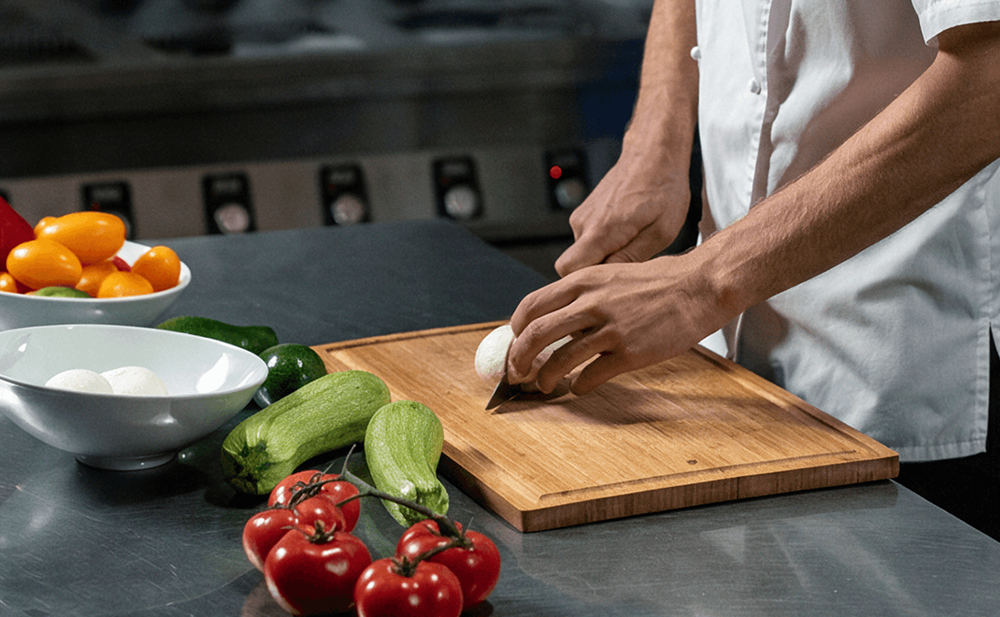
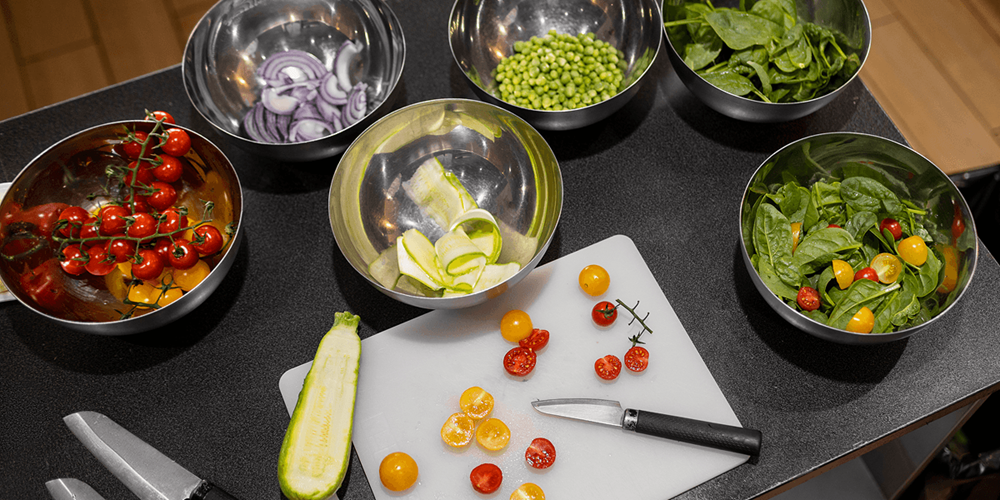
- Preparation waste. Trim from vegetables and proteins accounts for a significant but often untracked share of kitchen waste. Batch errors, imprecise portioning, and production runs that don’t align with actual covers fall here too. These losses are absorbed quietly — rarely logged, rarely measured.
- Overproduction. Buffet formats, banquet setups, and any service where product is prepared ahead of confirmed demand create structural surplus. Hotel F&B teams face this most acutely, particularly at breakfast and during Ramadan. When production is built for 200 covers and 160 arrive, the gap doesn’t close by itself.
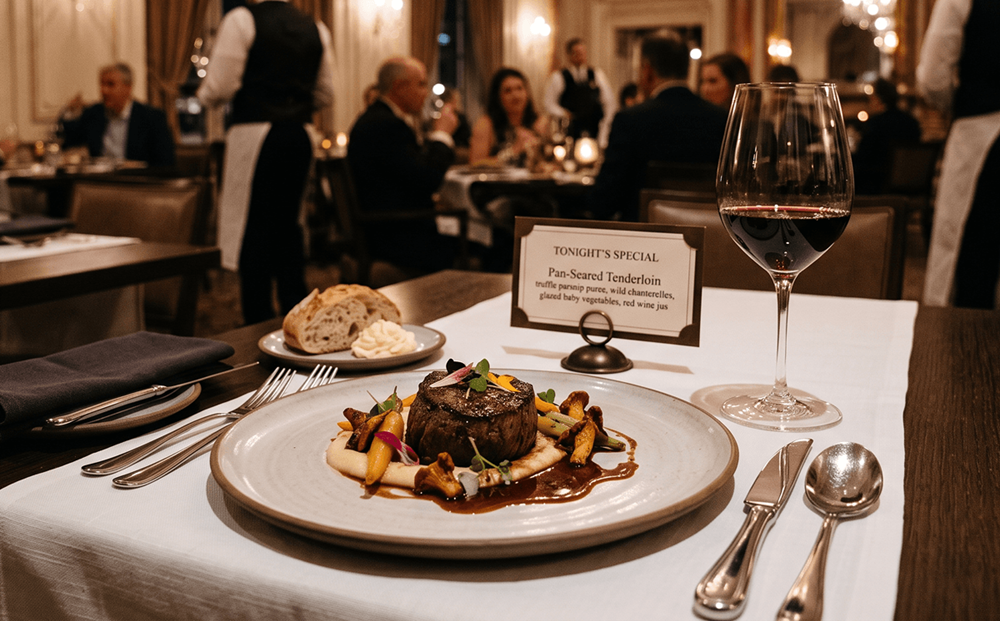
- Plate waste. A 2026 report from Georgetown University’s Portion Balance Coalition and Earth Commons Institute found that roughly 17% of meals go uneaten in US restaurants, with nearly 70% of that waste coming from what customers leave on the plate. Notably, only around 20% of restaurants currently track this front-of-house waste at all.
The Full Cost of Food Waste
- For the environment. The environmental consequences of food waste are well documented. When organic material goes to landfill rather than compost, it produces methane. Food loss and waste generates 8 to 10% of annual global greenhouse gas emissions, with an estimated economic toll of approximately $1 trillion a year (UNEP, 2024).
- For the community. Food that goes to landfill instead of to people represents a choice, even when it is an unconsidered one. In regions where food insecurity and surplus coexist within the same city blocks, that gap is visible. The human cost of waste is not abstract; it is measured in meals that could have been served elsewhere.
- For the hospitality operation. This cost is direct. Food costs typically run at 30 to 35% of sales for full-service restaurants. In an industry where pre-tax margins rarely exceed 4 to 5% — and where improving restaurant sales in 2026 increasingly means protecting what you’ve already purchased — every kilogram that reaches the bin without generating revenue is a double loss: the ingredient cost and the revenue it could have produced. The Georgetown analysis puts the aggregate US restaurant food waste figure at $162 billion annually. Research from Champions 12.3, covering 114 restaurant sites across 12 countries, found that operators who invested in structured waste reduction programs saved $7 for every $1 invested, and reduced kitchen food waste by 26% on average over 12 months (WRI and WRAP, 2019). The investment case is not marginal.
What Restaurant Operators Can Do About It

The interventions that consistently produce results sit across five areas.
- Sourcing and storage. Working with suppliers to align delivery schedules with actual demand reduces over-ordering. Implementing FIFO across every cold room and dry store, with clear labeling and dated stock rotation, cuts spoilage materially. Smaller, more frequent deliveries maintain freshness without accumulating excess.
- Measure first. Before any other intervention, operators need to know what is actually going in the bin. Without a baseline, kitchen teams have no reliable way to know what they’re actually discarding. A simple weekly waste log by category (prep waste, plate returns, spoilage) gives your teams enough visibility to prioritize where to start. The data tends to be surprising.
- Menu design. Most food waste is determined before the kitchen even opens; it is built into the menu. Dishes that require unusual cuts, single-use ingredients, or produce with poor yield ratios create structural waste that no amount of training will fix. Menus built around cross-utilization — where the same ingredient appears across multiple dishes in different preparations — reduce the number of slow-moving items in storage. Seasonal menus built around available supply rather than fixed global sourcing reduce both cost and waste simultaneously. Making high-waste items such as side dishes and garnishes opt-in rather than automatic is one of the most direct levers operators can pull.
- Trim yield and creative repurposing. Prep waste — the trimmings that come off every vegetable and protein — accounts for a significant share of what hotel and restaurant kitchens discard. Much of it is edible. According to Winnow, hotel kitchens waste 5 to 15 percent of all food purchased, with prep trimmings making up a substantial portion of that. Seven Red Carnation Hotels reduced trimming waste by 40% in six months by mapping trimmings into new dishes: watermelon rinds into chutney, pineapple peels into cocktail syrups, fruit molasses replacing treacle in bread recipes (Winnow / World Sustainable Hospitality Alliance, 2025). The starting point is asking which byproducts are genuinely inedible; the answer is usually fewer than assumed.
- Team training. Knife skills, portioning discipline, and prep yield standards require regular reinforcement, not just onboarding coverage. Operations that brief teams weekly on waste targets — and share the numbers openly — tend to see sustained improvement. Kitchen culture around waste reflects management culture around accountability.
- Redistribution and composting. Food that cannot be sold but is still safe to eat should have a donation pathway. Operators can establish redistribution partnerships with NGOs, community kitchens, or staff canteens divert product that would otherwise reach the bin. What is genuinely unusable belongs in a composting stream, not a general waste skip.
- Technology and data visibility. Many operations cannot describe their waste accurately because they are not tracking it. Systems that connect reservation data, POS activity, and production planning allow teams to spot overproduction patterns before they compound. Practical AI for F&B teams is also beginning to automate those adjustments, reducing the manual work of aligning prep volume with actual demand.
The Role Data Plays

Food waste in restaurants is ultimately a data problem. The interventions that produce the most consistent results — sharper sourcing, deliberate menu design, portioning standards, creative repurposing — all depend on knowing what the kitchen is actually discarding and where. Without a baseline, the kitchen works from instinct. With one, the decisions become easier to make and easier to defend.
The booking platform is where that visibility scales. When confirmed covers connect with your production schedule, the gap between what you prepare and what you serve becomes visible before service begins. If 160 covers are confirmed and the schedule is built for 200, the adjustment can happen in the kitchen, not in the bin.
September 29 is a useful annual reminder. The operators who take it seriously are building the systems to act on it every week of the year.
Book a free demo with Servme here to see how reservation data can support more deliberate production planning.