Too often, restaurant marketing starts with a channel. Someone decides to post more on Instagram, run a Google ad, or send an email campaign. The channel is chosen before there is any clarity on who the target guest is, what the restaurant stands for, or what a competitor down the road is already doing better. This is the sequence problem. A restaurant marketing strategy that works starts several steps earlier.
This guide covers the full process: understanding your guests and your competitors, clarifying the brand, choosing the right channels, building a calendar, and measuring what is actually driving covers.
Know Your Guests
The first step in any restaurant marketing strategy is audience definition. Before spending anything, an operator needs to know who is coming through the door and why.
- Occasion: A restaurant that fills up with anniversary dinners on Friday nights has a different marketing job than one that runs on corporate lunches.
- Demographics: Age, location, and spending habits all shape which channels reach the right people.
- Behavior: Whether guests book in advance, walk in, or return regularly tells you where the marketing effort should go.
Booking data answers these questions faster than surveys. Occasion capture at the reservation stage, visit frequency, and average spend per cover give you a working picture of your guest base. Understanding the restaurant guest journey — how a guest moves from first hearing about a venue to returning for a second visit — gives that picture a structure to build the strategy around.
Know Your Competitors
Competitor analysis is the second half of this foundation. Identify three to five direct competitors: restaurants with a similar offer, price point, and location. For each one, assess:
- Which channels they are active on;
- What content performs well for them;
- What their booking experience looks like;
- Where there are visible gaps.
A competitor who has no presence on Google Business Profile and weak Instagram content is leaving discovery traffic unclaimed. One who relies entirely on a third-party booking platform is paying per cover for guests they could be acquiring directly. Those gaps inform where to invest.
For hotel F&B teams, this analysis has an additional dimension. The split between in-house guests and external covers tells you how much of the restaurant’s demand is captive and how much depends on marketing to bring people in from outside. A hotel restaurant where fewer than half the covers come from walk-in or advance external bookings has a marketing gap that no amount of internal signage will fix.
Define the Brand Before Choosing Any Channel
Marketing without a clear brand brief produces inconsistent results across channels. The brand brief does not need to be complicated. It should answer three questions:
- What occasion or need does this restaurant serve?
- What makes it different from the competitors identified above?
- What would a guest say to a friend to describe the experience?
The answers shape everything that follows. They determine the visual tone on Instagram, the register of the email copy, the description on the Google Business Profile, and the language of the booking confirmation message. A restaurant positioning itself as the best neighborhood lunch spot runs different marketing from one positioning as the city’s most reliable corporate dining venue. Both are valid. The mistake is producing content that could describe either.
Brand consistency also applies across the physical experience. If the Instagram feed suggests a certain atmosphere and the room does not deliver it, the marketing is producing the wrong expectation. That gap shows up in reviews, and reviews feed back into discovery.
No restaurant needs every channel. What matters is knowing which channels serve each touchpoint of the guest journey: getting discovered, converting that interest into a booking, and keeping the guest coming back. Below is a working overview of the main options at each stage.
Getting Found: Discovery Channels
- SEO & Google Search
Most dining decisions start with a search. A well-maintained Google Business Profile — with accurate hours, current photos, a direct booking link, and recent reviews — handles a significant share of local discovery at zero ongoing cost. Beyond the profile, blog content and on-site SEO help the restaurant rank for occasion-specific and cuisine-specific queries. This is a slow channel that compounds over time: it rewards restaurants that invest early and consistently.
- Pay-Per-Click Advertising
Google Search ads and Meta ads (Instagram and Facebook) let operators target by location, occasion, and audience profile. They work best for time-bound campaigns: a Valentine’s Day set menu, a new weekend brunch launch, or a seasonal promotion that needs reach fast. Unlike SEO, pay-per-click stops when the budget stops. It is a burst channel, not a foundation. The budget should be tied to a specific goal with a measurable return — cost per booking, not cost per click.
- Social Media
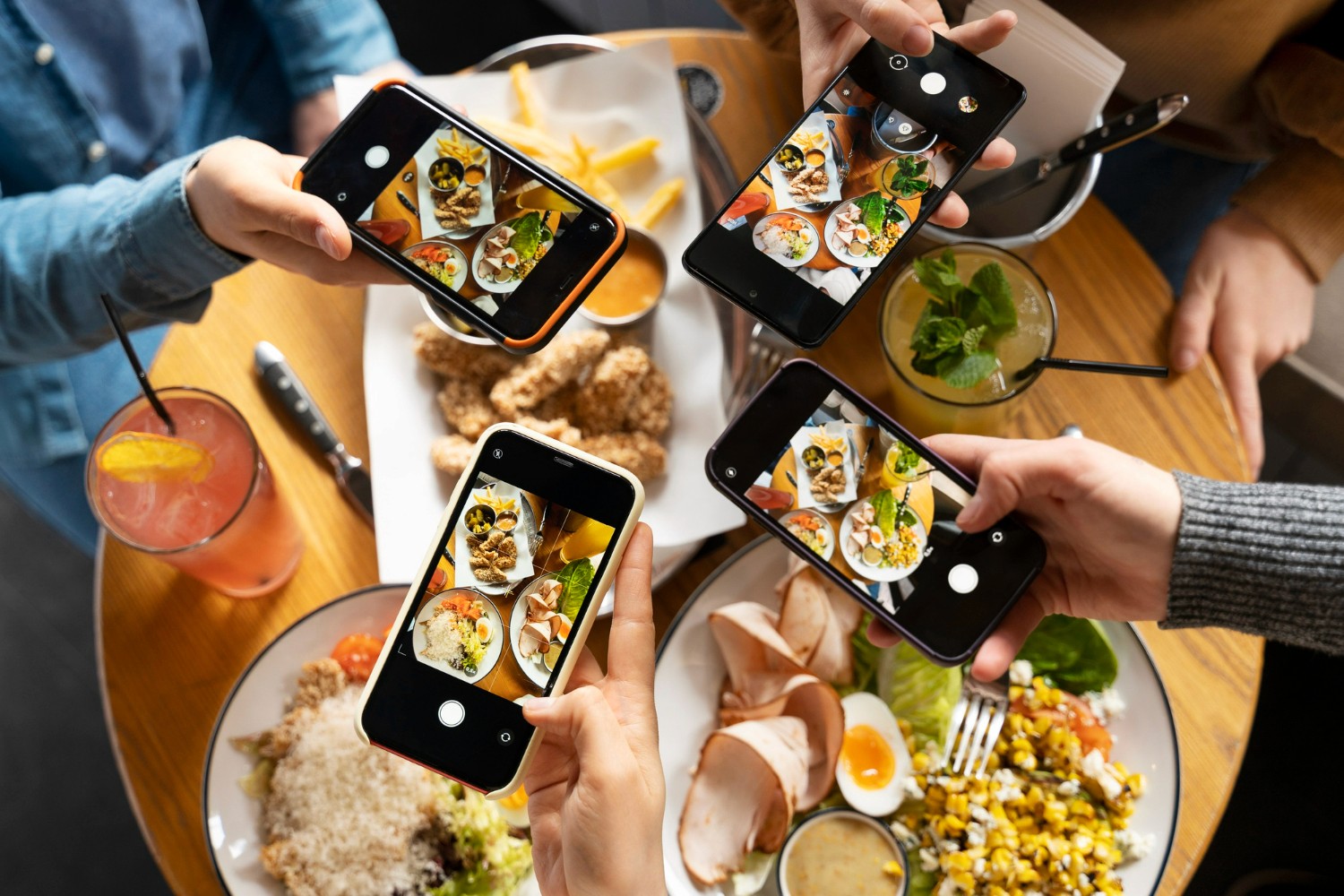
Instagram and TikTok are discovery channels for restaurants where the visual experience — the food, the room, the occasion — is part of the appeal. Consistent content that shows the product honestly attracts the right audience; inconsistency or misleading photography attracts guests who leave disappointed reviews.
- Influencer Marketing
Influencer marketing works best for restaurants with a strong visual identity or a story worth telling. Micro-influencers — those with between 5,000 and 50,000 followers in the local market — typically produce higher engagement and more credible recommendations than celebrity accounts. Track whether the audience actually books, not just whether the post gets likes.
- Online Food Delivery Platforms
Platforms like Deliveroo, Talabat, and Uber Eats are both a revenue channel and a discovery tool. A guest who orders delivery and has a good experience is a candidate for a dine-in visit. The marketing job is to move occasional delivery customers toward a direct relationship: an insert in the packaging with a QR code to book a table, or a loyalty offer exclusive to in-venue guests — useful, but expensive per order. Delivery platforms should sit alongside the direct booking strategy, not replace it.
- Print Advertising
Local lifestyle magazines, hotel in-room directories, and event programs still reach certain dining segments, particularly higher-spending guests making occasion-driven decisions in advance. Effectiveness varies significantly by market and occasion type; it warrants testing rather than assumption in either direction.
Converting Interest into Bookings
- Reserve with Google
Reserve with Google places a direct booking button inside the Google Search result itself, before the guest clicks through to a website. For restaurants with a reservation system that integrates with it, this shortens the booking journey at the highest-traffic discovery point. It captures intent at the moment it is strongest and routes it directly to a confirmed reservation.
- Booking Integrations on Social Media
Instagram and Facebook both support direct booking integrations in the profile. A guest who discovers the restaurant in the feed can move from that moment to a confirmed reservation without leaving the app. Activating the integration closes a drop-off gap that some restaurants never measure but consistently lose bookings through.
- Third-Party Booking Platforms
These platforms have their own discovery audiences and drive incremental bookings, especially for guests searching across multiple venues at once. However, the cost is typically a per-cover fee, and the platform usually retains the guest’s contact data. That makes them a poor retention channel.
Keeping Guests Coming Back
- Email, SMS & WhatsApp Marketing
These channels reach guests who have already chosen the restaurant once, making them the most cost-effective option. A post-visit SMS sent within 48 hours, an anniversary reminder timed to last year’s occasion, and a seasonal email campaign sent three weeks before a peak trading period all produce direct bookings at very low cost. WhatsApp performs the same function in markets where it is the primary messaging platform, with notably higher open rates than email. None of this works without a guest contact database, which means owning the booking relationship rather than ceding it to a third-party platform.
- Loyalty Programs
A loyalty program is most effective when it is linked to booking data rather than a separate points app the guest has to remember to open. Recognition on arrival, a standing note about dietary preferences, and a birthday message that arrives a week before the date are all mechanics that cost almost nothing to execute and produce repeat visits that would otherwise not happen. The goal is to make a returning guest feel known, not to administer a points balance.
- Local Partnerships
Corporate accounts, hotel concierge relationships, and cross-promotions with nearby businesses are distribution channels that require no advertising budget. A hotel with no in-house restaurant sending guests to a neighboring venue, or a wellness club whose members need a reliable post-session lunch spot — these partnerships move covers reliably when the referral relationship is actively maintained. They belong in the strategy alongside the digital channels, not as an afterthought.
Build the Calendar Around Your Trading Patterns
A restaurant marketing strategy without a calendar produces promotions that arrive too late. The New Year’s Eve campaign that goes out on December 20 misses the guests who decided in November. The Ramadan campaign that launches on day one has already lost the early bookings to operators who communicated two weeks earlier.
The fix is to build a trading calendar before planning any campaign. Mark the dates that move covers in the specific market — not generic hospitality dates, but the actual peaks and troughs from the restaurant’s own booking history. Then, set an outreach date for each campaign: work backward from the target date by at least two to three weeks, longer for events that guests plan further in advance.
The Servme restaurant marketing calendar maps this structure across the full year, with key dates and suggested lead times built in. It is a useful starting point for teams building their first structured plan.
Measure What Is Driving Covers, Not Just Engagement
Marketing metrics like reach, impressions, and email open rates tell you that people saw the content. They do not tell you whether anyone booked because of it. The metric that matters for a restaurant is simpler: how many covers can you trace to each channel?
Tracking referral source on bookings answers this directly. A restaurant running direct bookings through a website widget, Google, Instagram, and a third-party platform can see exactly which channel is producing covers. That comparison usually surfaces two or three decisions quickly: one channel is outperforming its budget allocation, one is producing bookings at near-zero cost that nobody thought to check, and one is generating traffic that never converts.
A quarterly review of this data is enough for most restaurants. The goal is not to optimize continuously but to make three or four structural decisions per year about where to invest more and where to pull back. A restaurant marketing strategy that never gets reviewed is not a strategy; it is a plan that was made once and then ran on its own.
Servme connects your marketing channels to your reservation data, so you can see which campaigns are driving covers and which are not. Book a demo to see how it works for your operation.