A guest opens their browser and asks, “Where should I eat tonight?” The AI responds with four names. It doesn’t show 20 results the guest can scroll through. It names four restaurants and stops. If yours isn’t one of them, that guest might be gone. This is the new reality of AI restaurant recommendations.
AI tools built into search engines and voice assistants are becoming a primary channel through which guests choose where to eat. And the shift is happening fast.
The Numbers Behind the Shift

In 2026, consumer adoption of AI for local business recommendations grew from 6% to 45% in a single year in the US and the UK (BrightLocal). For restaurants specifically, 22% of US diners say they have already used AI assistants like ChatGPT, Gemini, and Perplexity to choose where to eat. Among diners aged 25—34, that figure rises to 61%.
These numbers are what you, as a hospitality operator, should sit with, because the pattern is consistent across markets. Guests around the world are beginning to delegate decisions to AI. The window is now.
Most Venues Are Already Invisible

Yet, only 39% of restaurants have updated their online information to optimize for AI search visibility. This may explain why 83% never appear in AI recommendations at all, despite 86% having an active Google presence (Uberall).
Most operators believe their digital presence is adequate because they rank on Google. For AI recommendations, that assumption doesn’t hold. A Google Business profile is no longer sufficient on its own. AI engines evaluate a smaller, more selective set of signals than search algorithms do. AI engines also give one answer, not a results page. They name 3 to 5 venues per query only before stopping. As a result, every venue that appears is a disqualification of everyone else.
Understanding what AI evaluates is the starting point for any operator who wants to appear in recommendations. Here is what AI engines actually read.
1. Rating Floors
AI engines don’t rate restaurants themselves. They synthesize signals that already exist online. Then, they recommend only the venues that have produced enough consistent, credible data to cite with confidence. Ratings are the first filter in that process. According to the Uberall research, ChatGPT primarily recommends restaurants averaging 4.3 stars or higher; Perplexity’s observed floor is around 4.1; and Gemini’s is around 3.9.
A venue with a 4.0 average can rank on the first page of Google and still sit below the point at which AI engines will say its name. That gap — between being findable and being recommendable — is new. You should know which side of it you’re on.
2. Reviews
Passing the rating floor gets you considered. Reviews are what get you recommended. Restaurant listings and review platforms account for over 41% of the sources AI tools cite when recommending restaurants (Yext). Keep in mind that specificity is key. AI can extract meaning from what a reviewer wrote, not just how many stars they left. “The lamb chops at the Thursday tasting menu are exceptional” gives an AI a concrete attribute to reference when a guest asks for fine dining with a specific profile. “Great food, loved it” gives it nothing. Volume and recency matter too: venues with a high number of recent, specific reviews generate more extractable signals.
It is also worth knowing that ChatGPT leans primarily on third-party directories when building its recommendations, while Gemini weights a restaurant’s own website more heavily (Uberall). Both need to be maintained, not one or the other.
3. Consistent Digital Footprint
Online consistency determines whether AI can trust your venue’s identity. AI engines don’t simply crawl listings; they attempt to resolve a restaurant as a single, distinct entity assembled from everything online.
If your venue name, address, and phone number appear differently across Google, TripAdvisor, your booking platform, and your own website, the engine cannot confidently assemble you into one entity. And an entity it can’t resolve is an entity it won’t recommend.
4. Booking accessibility
Guests who find a restaurant through AI want to act immediately. Research from Toast found that 65% of diners go directly to the restaurant’s own website to make a reservation. That means the path from AI recommendation to confirmed booking is short. Any friction in that path converts a warm lead into a lost cover.
Keep also in mind that 44% of diners say they find a restaurant less appealing and stop trying to book when the process is too difficult (Toast).
What You Can Do Now

A 2026 Popmenu survey of 328 operators found 78% say they are already optimizing their websites for AI and traditional discovery. But only 34% have an active review management process. That gap — between operators who believe they are covered and operators doing the specific work AI engines actually reward — is where the opportunity still lives for anyone willing to act precisely rather than broadly.
The operators who will benefit earliest from AI-driven discovery are the ones who treat their online presence as a product rather than an admin task.
- Start with a visibility audit. Ask several AI engines questions a guest would ask and see if your venue appears, how it’s described, and if not, who appears instead. Then, check that your venue’s name, address, phone, and cuisine type are identical across every platform where guests might encounter you. Any variation reduces AI’s confidence in your identity.
- Build a review strategy. The goal is not a high star rating; it’s a body of specific, textual reviews that give AI concrete attributes to work with and raise your rating. Send post-visit review requests, mention signature dishes, and train service teams to invite guests to describe what they enjoyed, not just how much.
- Make your website the answer. Rebuild the pages around the actual questions guests are already asking: what is your restaurant known for? What are the dietary options? Is there private dining? Where do guests park? Most restaurant websites don’t answer these questions; they describe the brand in adjectives. So write the answers in plain, structured language rather than what an agency wrote about the ambiance. A website built that way gets cited.
- Ensure the booking path is simple. Whether guests arrive via AI, social media, or any other channel, the moment between “I want to eat there” and “Reservation confirmed” should require as little effort as possible. Every additional step is a drop-off.
A Specific Challenge for Hotel F&B
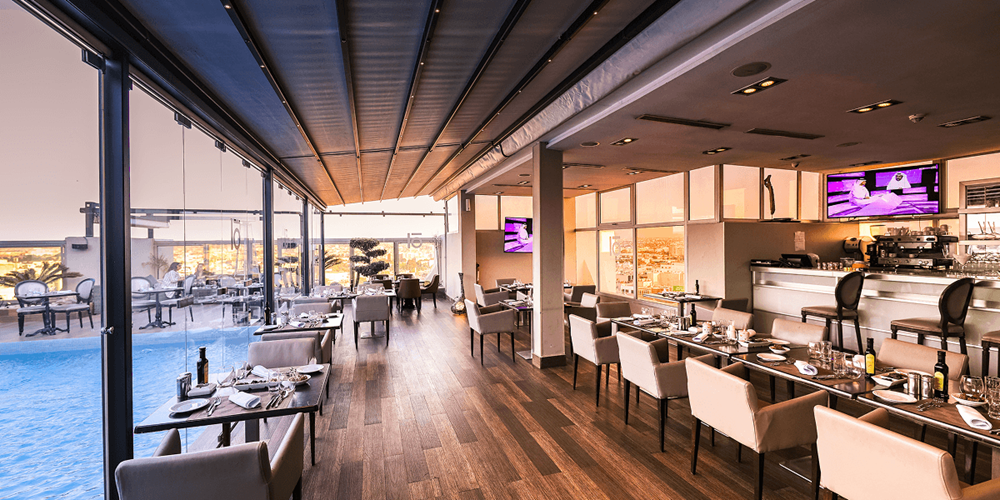
For hotel restaurant operators, the challenge carries an extra layer. Many hotel F&B outlets are listed across platforms under the hotel brand rather than as a distinct restaurant entity. This collapses the venue’s identity: the AI sees a hotel, not a restaurant with a cuisine profile, bookable covers, and its own review body.
Separating the restaurant’s digital presence from the hotel listing is the first move for any hotel F&B team that wants to show up in AI recommendations. Build its own Google profile, its own review volume, its own consistent name across platforms.
The AI restaurant recommendations channel is early-stage for most markets. That is an opportunity. The venues that build strong AI-readable signals now will be harder to displace when the behavior reaches mainstream adoption. What guests notice about your venue online has always mattered. Now AI notices it first.
Servme helps operators build the guest data and digital presence that drives discovery across AI, search, and every channel guests use to choose where to eat. Book a demo here.