Ask a guest why they couldn’t get the table they wanted and they’ll often tell you the restaurant was fully booked. Ask a restaurant operator the same question and you get a more complicated answer. One that has less to do with demand and more to do with how reservations are now distributed.
Restaurant reservation management has fractured, which carries costs across three dimensions: the monthly spend to stay visible on every channel guests use; the guest data the restaurant ends up not owning; and the reservation management overhead of running it all without a centralized layer underneath.
How the Booking Landscape Fragmented
Ten years ago, most restaurants took reservations through one or two channels: their own phone line and perhaps their website or booking software platform. The COVID-19 pandemic changed that. Operators rushed to add digital reservation options as dining rooms reopened under capacity limits. The platforms that were already in the market expanded their reach. By the time dining normalized, the channel landscape had permanently widened.
Today, a single restaurant might be discoverable through its own website, search engines, social media, hospitality discovery and listing sites, reservation apps, credit card rewards programs, delivery platforms, hotel concierge systems, membership clubs, and more. The dining public no longer uses a single method to find a table, and limiting channel presence means losing visibility.
That logic creates a structural trap. For example, if you, a restaurant operator, sign an exclusive agreement with any single reservation platform, you hand that platform control over where you appear online and how your availability is managed. So, you have to run multiple channels deliberately, which means carrying the cost of all of them.
What Fragmentation Actually Costs

The cost of multi-channel presence isn’t a single line item. Each channel type carries its own cost structure. If you’re running ten or more channels simultaneously, you are often carrying costs you may not have fully mapped.
Reservation apps and third-party booking platforms typically charge a per-cover commission, a monthly subscription fee, or both. Running one platform is a manageable cost. Running several means those fees stack, and every booking that doesn’t come through a direct channel adds to the total. For high-volume operations, the annual figure on platform fees alone becomes significant.
Credit card rewards programs and membership clubs carry a different kind of cost: opportunity cost. These arrangements typically involve allocating covers to cardholders or members on preferential terms: exclusive access, priority availability, or guaranteed seating. The restaurant gains visibility within that program’s network, but it gives up control over how those covers are priced and who fills them.
Delivery platforms that have entered the reservation space bring their own commission structures, often heavier than those of dedicated booking platforms.
Discovery and listing sites vary. Some charge per cover, some operate on a subscription model, and some are free to list on but require active profile management — someone on the team updating availability, photos, and descriptions across each one.
Your own website and social channels are commission-free, but they still require a booking tool, a maintained bio link, and a widget that stays in sync with live availability.
For hotels, the PMS and concierge system connections add integration and maintenance costs on top.
Then there is the marketing layer. The marketing tools built into reservation platforms often don’t deliver the segmentation operators actually need. So, many pay for a separate email marketing tool on top of everything else. By the time you map your full reservation infrastructure spend, it’s rarely a small number and it’s rarely been mapped in full.
The Data Problem That Compounds It

Beyond the direct spend, fragmentation creates a guest data problem that makes the financial cost harder to recover. The gap isn’t uniform. Each channel type has a different data ownership model, and the worst cases are often the channels that come with the most other strings attached.
Direct bookings through the restaurant’s own website give you full ownership: name, contact details, booking history, preferences. Google Reserve and social media pass the booking through but there’s no guest profile. Reservation apps and third-party platforms share basic information — name, party size, date — while visit history, spend, and preferences stay with them. Walk-ins generate no data at all unless the host stand captures it manually at arrival.
Credit card rewards programs and membership clubs sit at the far end of the spectrum. A guest who books through a card partnership is a member of that program first. The restaurant receives the cover; the program keeps the guest. There’s no booking history to reference, no direct contact to follow up with, and no way to know whether that guest has visited before through a different channel. Delivery platforms that have entered the reservation space operate on the same logic: the user relationship belongs to the app. The restaurant gets a booking; the platform keeps everything else.
For hotel F&B teams, the silo problem is structural. A guest might book the main restaurant through the concierge — data in the PMS — the bar through a third-party app — data on that platform — and pool dining as a walk-in. Three touchpoints, three separate records, if any record at all. The PMS logs the stay. The restaurant logs the cover. Nobody holds the full picture of a guest the property has served three times in one visit.
The consequence is that the marketing meant to bring guests back is working from a partial list by design. Contacts from channels that share data sit alongside gaps where other channels kept theirs. The campaigns cost the same but reach a fraction of the actual guest base. That gap doesn’t appear on a P&L, but it compounds every line that does.
The Fix Isn’t Fewer Channels
Pulling back from these channels isn’t realistic. They are where guests look, and visibility there matters. But presence on multiple platforms doesn’t have to mean fragmentation. You can solve this problem by building a reservation management layer that sits across all of it and brings everything into one place.
Three things make that work in practice:
- Integrations that keep availability and bookings synchronized across every channel. A table filled from one source shows everywhere else instantly, without manual updates and without the double-booking risk that comes from managing platforms separately. Integrating your reservation and PoS systems into that same layer means you capture guest spend and visit history alongside booking data, not siloed in a different system.
- A unified guest profile that captures every booking, visit, and preference regardless of where the reservation originated. When that profile exists, the restaurant owns the relationship. It can segment its guest base by visit frequency, spending behavior, or preferences and run campaigns directly, without needing a separate marketing tool or working from an incomplete exported list.
- A direct booking experience on your restaurant’s own website and social channels. A branded booking widget that works in a few taps gives guests who want to book directly an easy way to do it. And every booking that comes through that route is commission-free, with the guest data fully owned by the restaurant. Over time, shifting even a portion of bookings to direct channels compounds: the per-cover cost drops, the guest database grows, and campaigns become more precise.
Why This Matters Now
The reservation landscape will keep fragmenting, with more platforms, partnership programs, and channels competing for the same guests. If you’re building the infrastructure to centralize that fragmentation today, you will have a compounding advantage: a falling cost per booking, a growing guest database, and a reservation management operation that gets smarter with every shift.
The reservation problem isn’t demand. The tables exist. The guests want to book them. The question is how much it’s costing to connect them and who owns the data when that booking is made.
See How Servme Centralizes Your Bookings
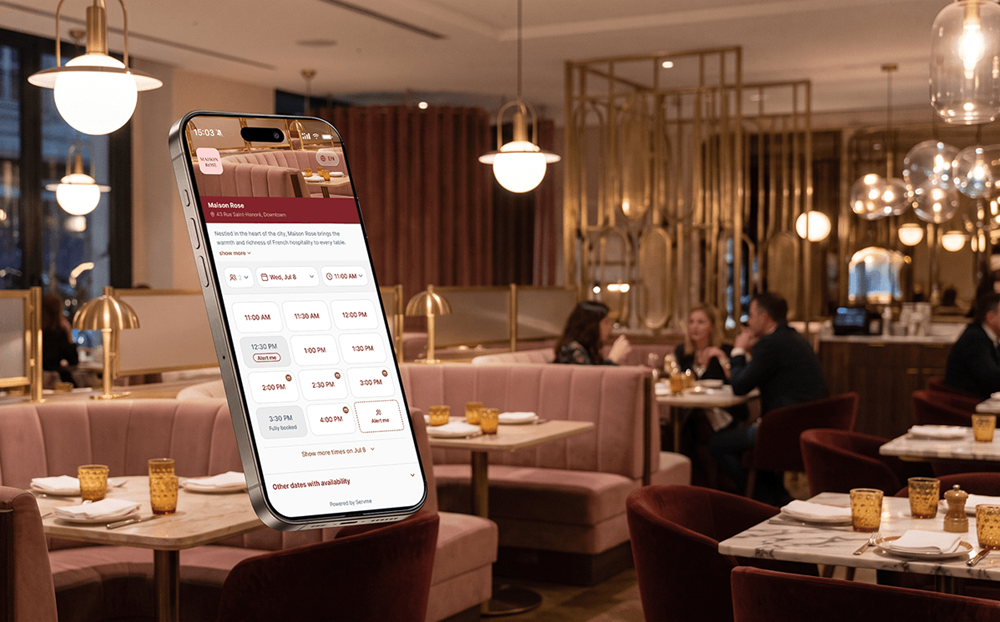
Servme connects all your booking channels, your PoS, and your guest profiles into one platform. Availability stays in sync. Every guest builds one record regardless of where they booked. And you can market directly without paying for a separate tool. The booking widget puts a direct, commission-free reservation experience on your own website and socials in minutes.
How Servme Integrates with Your Restaurant Ecosystem
Book a free demo to see how Servme works in your operation.